


Best Erosion Control for Slopes That Last
- Dustin Curry
- Apr 10
- 6 min read

A bare slope can look fine for weeks, right up until the first hard rain cuts channels through it and sends soil downhill. Once that starts, the fix usually costs more than it would have on day one. That is why erosion control for slopes needs to be planned early, especially in Oklahoma and Texas where heavy rain, wind, heat, and long dry spells all work against exposed ground.
Slopes fail for a few common reasons. Water picks up speed as it moves downhill. Sparse vegetation leaves soil loose. Poor grading sends runoff into the wrong areas. And on new construction sites, the top layer is often disturbed, compacted, or left bare long enough for weather to do damage. The right solution is not always one product. Most of the time, good slope protection comes from combining surface cover, root establishment, and water management.
What makes erosion control for slopes difficult
Not every slope has the same risk level. A gentle backyard grade behaves differently than a steep detention area or a long commercial embankment. The steeper the slope, the faster water moves. The longer the slope, the more runoff it collects before it reaches the bottom. Soil type matters too. Sandy ground can wash out quickly, while clay can seal over and create more runoff instead of letting water soak in.
Timing also matters. A slope installed in spring has a better shot at vegetation establishment than one left exposed in peak summer heat or just before a storm cycle. If the area gets regular irrigation, that helps. If it relies only on rainfall, the seed mix, mulch, and stabilizing materials have to do more of the work early on.
This is where many property owners get frustrated. They seed a slope, see a little green, then lose half the surface after one storm. The issue usually is not that grass cannot grow there. It is that the slope needed protection before the roots had time to take hold.
The best slope solutions usually work in layers
For most projects, erosion control is strongest when it addresses both immediate protection and long-term coverage. Immediate protection slows runoff and keeps soil in place. Long-term coverage comes from vegetation that roots in and holds the slope together over time.
That is why hydroseeding is such a practical option on many slopes. It applies seed, mulch, fertilizer, and bonding agents in one slurry, which gives more uniform coverage than dry broadcasting. The mulch layer helps hold moisture, reduce surface impact from rain, and protect the seed while it germinates. On moderate slopes, that can be enough to establish strong cover if the site is graded correctly and runoff is managed.
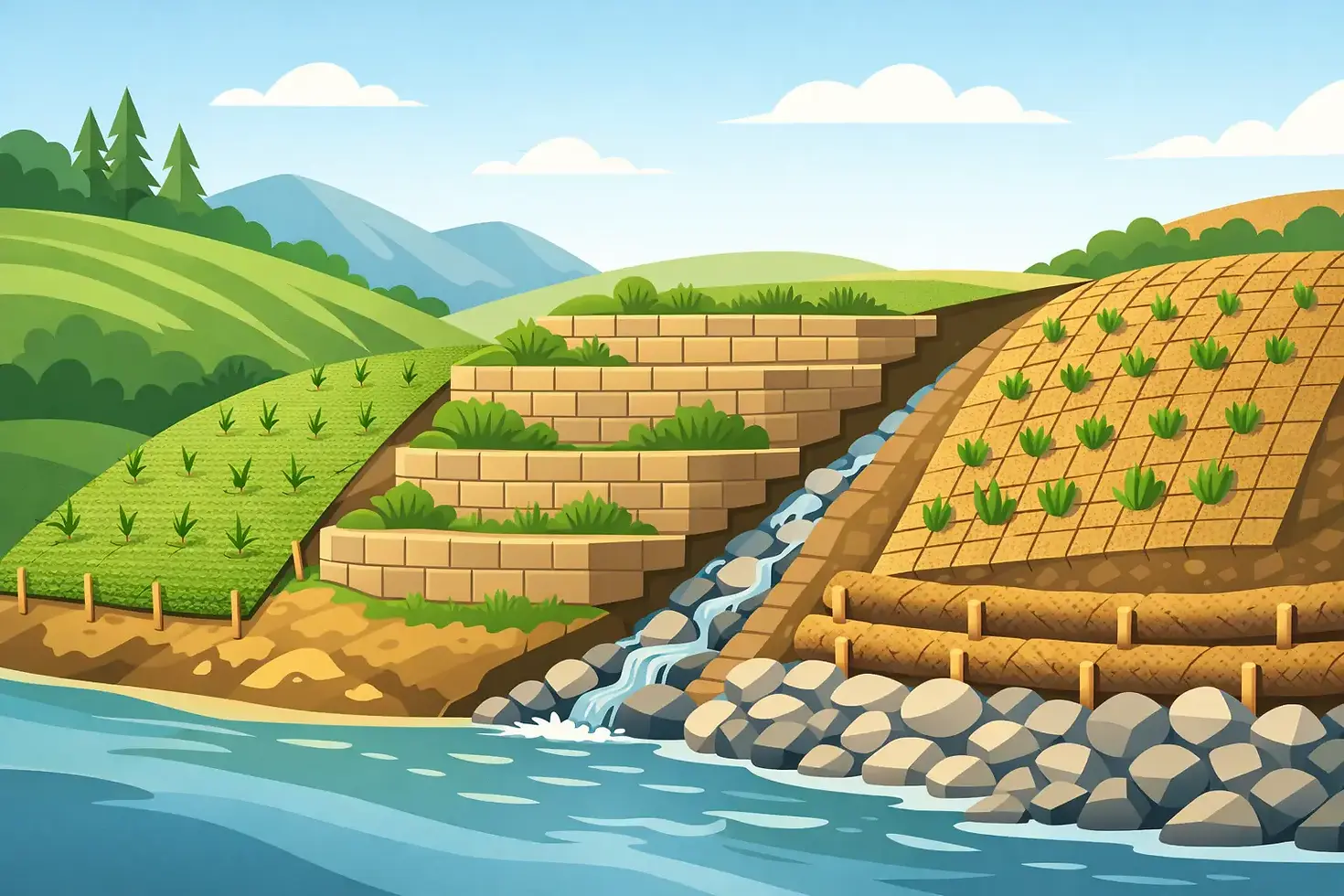
On steeper or more vulnerable areas, hydroseeding may need backup. Erosion control blankets, straw wattles, check structures, or tackifiers can help keep the surface stable while vegetation grows in. In some areas, drainage improvements are the real key. If runoff is concentrated and no channel or outlet has been built to handle it, even a well-seeded slope can fail.
Hydroseeding for slope stabilization
Hydroseeding works well for many residential, commercial, and large-area slopes because it covers ground fast and applies materials evenly. That matters on uneven terrain where hand spreading often leaves thin spots. A properly designed slurry can also be adjusted for local conditions, whether the goal is quick temporary cover, permanent turf establishment, or added stabilization.
For Oklahoma and Texas properties, climate matters just as much as application method. Seed selection needs to match the heat, drought patterns, and expected use of the site. A roadside slope, a pond bank, and a finished lawn transition do not all need the same type of grass. Fast germination is helpful, but durability is what keeps the slope protected over time.
Hydroseeding is not magic, though. It performs best when the slope has been prepared correctly. Loose debris, poor grade transitions, and runoff from roofs or pavement can all create washouts. If the soil is heavily compacted, roots may struggle to penetrate. If the slope is too steep, the slurry can need additional reinforcement to stay put during establishment.
When blankets, matting, or wattles make sense
Some slopes need more than vegetative cover alone. Erosion control blankets and matting are commonly used where runoff is strong or where the grade is steep enough that seed and mulch need physical support. These materials help hold the surface in place, reduce raindrop impact, and create a better environment for germination.
Straw wattles or fiber rolls can also be useful on longer slopes. They slow water, break up flow paths, and help trap sediment before it moves downhill. On construction sites, they are often part of a broader temporary control plan. On finished properties, they may be used during establishment and removed later or left in place depending on the material.
The trade-off is cost and labor. Blankets and wattles add protection, but they also add installation time. If a slope is mild and can establish quickly with hydroseeding alone, those extra materials may not be necessary. If the slope has already failed once, spending more upfront often saves money compared to repairing washouts later.
Drainage is often the real problem
A lot of slope erosion gets blamed on grass failure when the real issue is water concentration. If runoff from gutters, driveways, parking lots, or bare upstream areas is being funneled onto one section of slope, that section is carrying more water than surface cover alone can manage.
In those cases, erosion control for slopes may need swales, berms, interceptor drains, or defined channels to redirect flow. Sometimes the answer is as simple as changing where downspouts discharge. Other times it takes reshaping the grade so water spreads out instead of cutting a narrow path. Without that correction, reseeding the same damaged area can turn into a repeat job.
This is especially common on new builds. Final grading may look clean, but if the drainage plan is incomplete or the site changes during construction, runoff patterns can shift. One storm will show exactly where the weak spots are.
Choosing the right approach for your property
The right fix depends on slope angle, slope length, soil condition, water flow, timeline, and budget. A homeowner trying to stabilize a backyard grade after new construction may do well with hydroseeding and targeted reinforcement in a few trouble spots. A builder managing a large disturbed area may need staged erosion control with temporary and permanent coverage working together. A commercial property may need a cleaner finished appearance along with faster establishment near entrances, detention areas, or visible embankments.
Budget matters, but so does risk. The cheapest option on day one is not always the lowest-cost option over the full job. If a bare slope washes into pavement, fencing, drainage structures, or neighboring property, the repair scope expands fast. Soil replacement, regrading, cleanup, and reseeding can easily outpace the cost of a stronger initial plan.
That is why a site-specific quote matters. Good erosion control is based on what the slope is actually doing, not just what it looks like from a distance. Red Dirt 580 Enterprises approaches those projects with that in mind - matching the application and stabilization method to the ground, the weather exposure, and the performance the site needs.
What property owners can do before erosion gets worse
If you already see rills, bare streaks, exposed roots, or sediment collecting at the bottom of a slope, do not wait for a bigger storm. Early signs usually mean the surface is starting to lose the fight. Catching the problem early gives you more options and usually lowers the repair cost.
It helps to look at the full picture. Check where water is coming from, not just where the soil is missing. Notice whether the slope gets enough irrigation to establish grass without creating runoff. Look at whether vehicle traffic, foot traffic, or mowing patterns are disturbing the area. Even a good seed application can struggle if the slope keeps getting beat up before it matures.
A strong slope should do two things at once. It should resist washout during storms, and it should keep improving as vegetation thickens. If your current setup is only doing one of those jobs, it is probably time to adjust the plan.
The best time to protect a slope is before the weather tests it. The next best time is now, while the repair is still straightforward and the ground can still be brought back under control.


Comments