


How to Establish Bermuda Turf the Right Way
- Dustin Curry
- Apr 20
- 6 min read

If you want to know how to establish bermuda turf, start with this truth - Bermuda does not cover bad prep work. It is a tough, heat-loving grass, but it still needs the right soil, the right timing, and the right establishment method if you want thick, durable coverage instead of patchy spots and slow fill-in.
That matters even more in Oklahoma and Texas, where new lawns and disturbed ground take a beating from heat, wind, hard rain, and dry stretches. A Bermuda stand that gets off to a weak start usually stays behind. A Bermuda stand that is established correctly has a much better shot at handling traffic, drought, and long summers without constant rework.
Why Bermuda works so well here
Bermuda turf is a strong fit for properties that need performance first. It handles full sun, recovers well from wear, and holds up better than many cool-season grasses once summer heat sets in. For homeowners, that means a lawn that can survive real use. For builders, ranch operators, and commercial sites, it means dependable ground cover that can stabilize soil and improve the finished look of a property.
The trade-off is that Bermuda is not a shade grass, and it is not a grass you establish by cutting corners. If the site stays shaded most of the day, if drainage is poor, or if the soil is compacted and unworked, Bermuda will struggle no matter how good the weather looks on paper.
How to establish bermuda turf: start with the site
The biggest mistake people make is focusing on seed or sprigs before the ground is ready. Turf establishment starts with grade, drainage, and soil-to-root contact.
Bare ground should be cleared of weeds, rock, construction debris, and leftover materials that block rooting. If the site has been driven on by equipment or packed down during construction, the soil needs to be loosened. Compacted ground can keep water from soaking in and can stop roots from pushing down where they need to go.
Final grading matters just as much. Low spots hold water, high spots dry out too fast, and rough finish work leads to an uneven lawn that is harder to mow and harder to maintain. On slopes and drainage areas, prep work also affects erosion. If water is moving across raw soil, the turf establishment plan has to account for that before the first application goes down.
In most cases, a soil test is worth doing, especially on larger properties or commercial sites. Bermuda performs best when pH and nutrient levels are in range. You can establish turf without perfect soil, but poor fertility and imbalanced pH often slow coverage and weaken early growth.
Pick the right establishment method
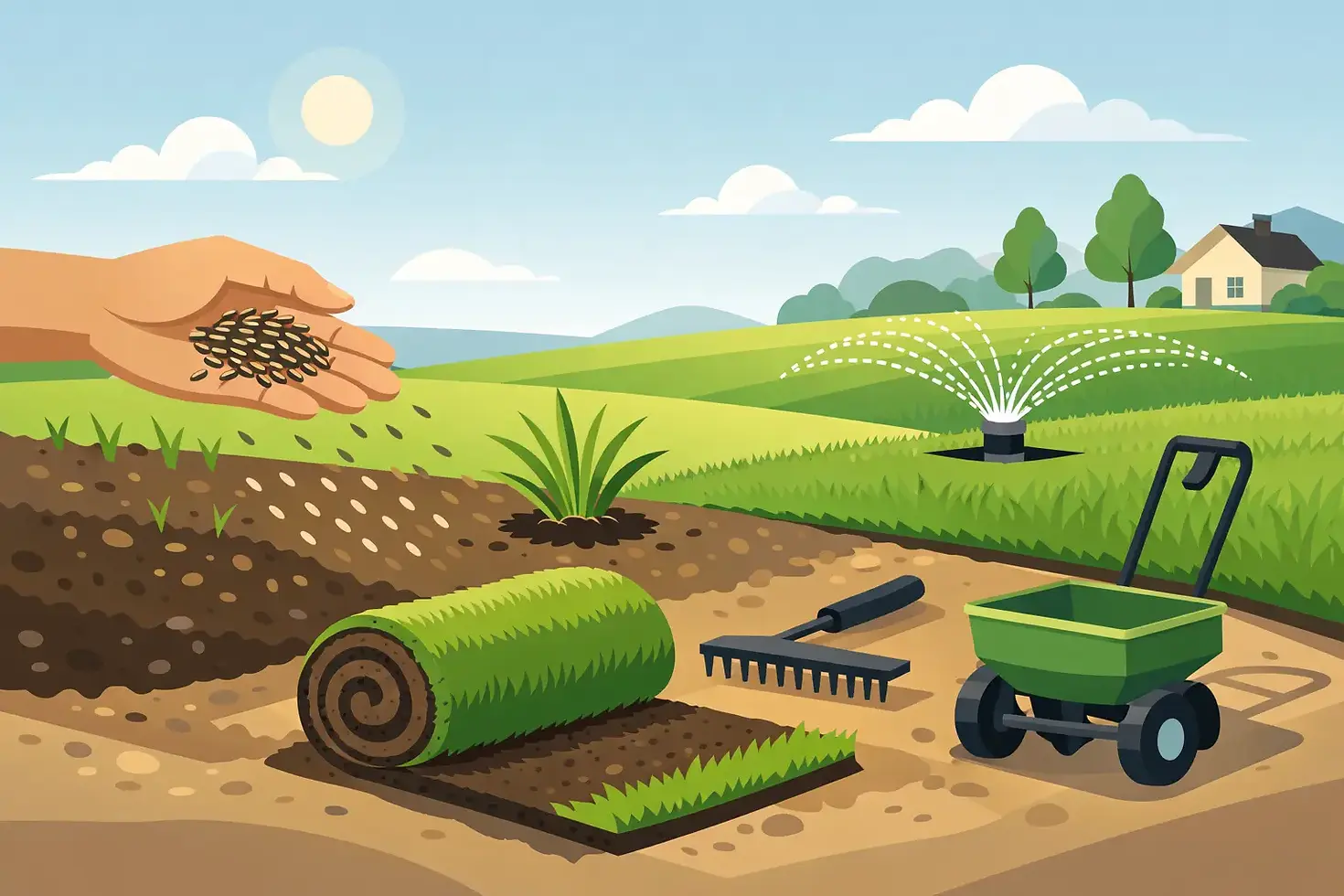
There is more than one answer to how to establish bermuda turf, and the right method depends on budget, timeline, site conditions, and the finish you need.
Seeding is often the lower-cost option for large areas where patience is acceptable. It works well when the site is properly prepared and irrigation can be managed during germination. The downside is that seeded Bermuda usually takes longer to reach full coverage than sprigged Bermuda, and washout risk is higher on slopes or exposed areas if the application is not protected.
Hydroseeding improves the seeding process by applying seed in a slurry with mulch, fertilizer, and tackifier. That gives more uniform coverage, helps hold moisture, and improves seed-to-soil contact. On many residential and commercial projects, it is a practical middle ground between broadcast seeding and sod.
Hydrosprigging is often the better choice when you want premium Bermuda establishment. Instead of seed, it applies live Bermuda sprigs in a protective slurry so the grass can root and spread aggressively. For clients who want a true Bermuda lawn with stronger long-term performance, especially in our region, sprigging is often the better fit than trying to force a lawn out of basic seed alone.
Sod still has a place when instant cover is the top priority, but it costs more and is not always the most practical answer for large sites. It also does not fix drainage, compaction, or poor subgrade. If the ground underneath is wrong, sod can fail just as fast as any other method.
Timing makes a big difference
Bermuda should be established during active growing season, when soil temperatures are warm enough for rooting and spread. In Oklahoma and Texas, that usually means late spring through summer is the best window.
Trying to establish Bermuda too early slows progress. The grass may sit there, stall out, or come in unevenly because the soil is still too cool. Waiting too late into the season can also create problems, especially if the turf does not have enough time to root before fall transition.
It depends on location, weather pattern, and the method being used, but in general, you want a stretch of warm conditions ahead of you. That gives Bermuda time to germinate or root, spread, and build strength before growth slows down.
Watering during establishment
Water is where a lot of projects succeed or fail. During establishment, Bermuda needs consistent moisture near the surface. Not standing water, and not mud, but enough moisture to support germination or sprig rooting.
Early on, that usually means lighter, more frequent watering. Once the turf starts taking hold, the goal shifts toward deeper, less frequent watering that encourages stronger root growth. The exact schedule depends on heat, wind, soil type, slope, and whether you are working with seed, sprigs, or sod.
Sandy ground dries out faster. Clay can hold moisture longer but may crust over or stay too wet if overwatered. Slopes lose water differently than flat lots. That is why a one-size-fits-all watering plan usually falls short.
If you let a newly established Bermuda area dry out repeatedly in the first phase, coverage can thin fast. If you overwater, you can invite disease, runoff, and weak rooting. The right balance is steady moisture up front, then a gradual move toward normal irrigation as the stand matures.
Fertility and early growth management
New Bermuda needs nutrition, but more fertilizer is not always better. A starter application can help support rooting and early development, especially when paired with hydroseeding or hydrosprigging methods that include nutrients in the mix.
After that, the next fertilizer step should match the turf's progress and the soil's condition. Heavy nitrogen too early can push top growth before the roots are ready. Too little fertility can leave the stand thin and slow to fill in. This is another area where a soil test helps take out the guesswork.
Mowing also starts sooner than some people expect. Once the turf is rooted well enough and has reached mowing height, regular cutting helps encourage lateral spread and a thicker stand. Waiting too long to mow can leave Bermuda leggy and uneven.
Watch for the problems that stall coverage
A Bermuda project usually struggles for a reason. The most common issues are poor prep, weak irrigation, bad timing, weed pressure, and unrealistic expectations.
Weeds are especially common on disturbed soil. If they are already established before turf work begins, they compete for moisture, space, and nutrients. If they show up after application, control has to be handled carefully so you do not damage young Bermuda in the process.
Heavy rain can also set a project back. On flat sites, it may puddle and drown out sections. On slopes, it may move mulch, seed, or topsoil before the stand can anchor itself. That is where erosion control planning matters just as much as grass selection.
Then there is the expectation problem. Bermuda is aggressive once it gets established, but that does not mean every site turns green overnight. Coverage speed depends on method, weather, maintenance, and the condition of the ground underneath.
When professional establishment makes more sense
For a small, level yard with working irrigation and decent soil, a hands-on property owner may be able to get Bermuda started successfully. On larger lots, new construction sites, drainage areas, slopes, and commercial projects, professional application usually pays off.
That is especially true when uniform coverage and soil stabilization matter. Hydroseeding and hydrosprigging give you broader, more controlled application than basic hand seeding, and they can be tailored to the site instead of forcing the same approach onto every property. For many Oklahoma and Texas clients, that means faster establishment, cleaner results, and less risk of starting over.
Red Dirt 580 Enterprises works with those conditions every day, which matters when the weather is tough and the ground is not forgiving. Bermuda can absolutely be built to last here, but it has to be established with the region in mind.
What good Bermuda establishment should look like
A properly established Bermuda area should begin to show even growth, improving density, and stronger color as it roots in and spreads. It should not stay thin for weeks without change, and it should not wash, crust, or separate from the soil surface.
The final result you want is simple - full coverage, stable soil, and turf that can handle heat and use without constant patching. Getting there takes more than putting grass on the ground. It takes prep, timing, water management, and the right method for the job.
If you are planning a Bermuda project, think past the first green-up. The real goal is not just to start turf. It is to establish a stand that holds on through the next hot stretch, the next storm, and the next season.


Comments