


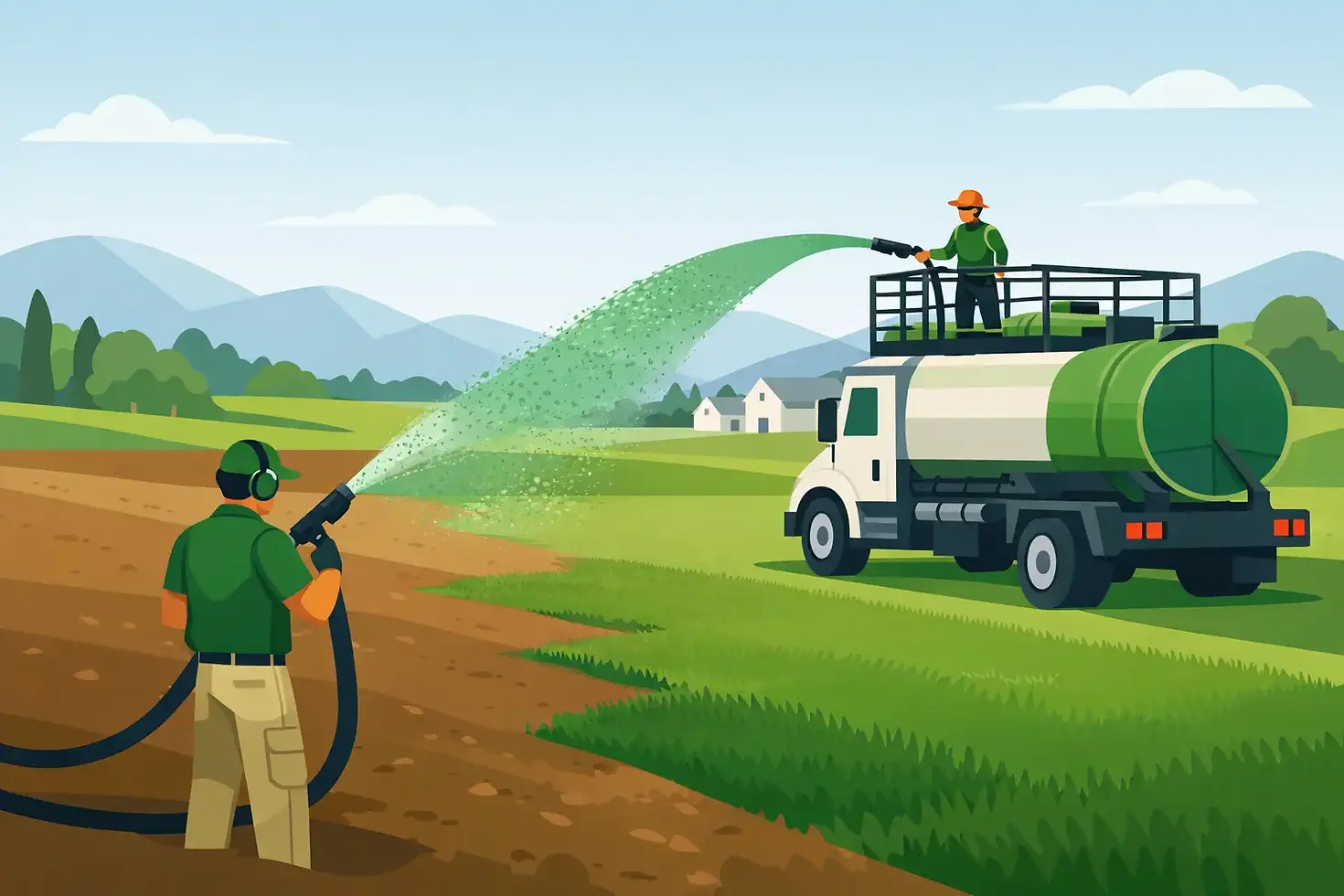
How to Hydroseed a Large Yard Right
- Dustin Curry
- Apr 26
- 6 min read

A big yard will expose every shortcut. If the soil is rough, the grade is off, or the watering plan is weak, hydroseeding will show it fast. That is why knowing how to hydroseed a large yard starts well before the slurry hits the ground.
For homeowners, builders, and property managers across Oklahoma and Texas, the goal is usually the same - get fast coverage, keep the soil in place, and grow turf that can handle heat, wind, and dry spells. Hydroseeding can do that well, but only when the site is prepared correctly and the seed mix matches the property.
How to hydroseed a large yard: start with the ground
The biggest mistake on large yards is treating hydroseeding like paint. It is not there to hide a bad surface. It is there to establish grass on a surface that is already ready to grow it.
Start with grading. Water should move away from the house and structures without creating channels that cut through the yard. Low spots will stay wet and thin out your stand. High spots dry out first and often germinate unevenly. On a large property, even minor grading problems become obvious once the grass comes in.
Next, remove what will compete with the seed. That means construction debris, heavy rock, leftover roots, and dense weed pressure. Existing weeds do more than make the yard look messy. They steal moisture and nutrients during the exact window when new grass is trying to root.
Soil condition matters just as much. If the top layer is compacted from equipment traffic, the seed may germinate but struggle to anchor. Loosening the top few inches gives roots a place to go. In some yards, adding topsoil or soil amendments makes sense. In others, the native soil is workable once it is loosened and cleaned up. It depends on how disturbed the site is and what kind of turf you are trying to establish.
Pick a seed mix built for the site
If you are figuring out how to hydroseed a large yard, do not start by asking what seed is cheapest. Start by asking what grass can actually survive there.
A wide-open yard in Oklahoma or Texas takes a different mix than a shaded backyard in a milder climate. Sun exposure, soil type, irrigation access, traffic level, and how quickly you need cover all affect the choice. Bermuda is a common fit for large, sunny areas because it handles heat and wear well. Temporary or transitional mixes may be used when erosion control or fast cover is the first priority.
This is where many large-yard projects go sideways. A generic seed blend may come up quickly, but quick germination is not the same as long-term performance. If the property gets full sun, reflected heat, and inconsistent watering, you need a turf choice that matches those conditions. Otherwise, you end up reseeding thin areas and spending more than you planned.
The mulch, fertilizer, and tackifier in the slurry matter too. They help hold moisture around the seed, improve contact with the soil, and keep the application from shifting in wind or runoff. On flat ground, the mix may be fairly straightforward. On slopes or erosion-prone sections, the slurry often needs to be adjusted for stronger hold and better protection.
Timing matters more than most people think
Hydroseeding a large yard is not just about the method. It is also about when you do it.
The best timing depends on the grass type and local weather pattern. Warm-season grasses usually perform best when soil temperatures are consistently warm enough for active growth. If you apply too early, germination slows down and the site stays exposed longer. If you apply in the peak of extreme heat without a solid irrigation plan, the seed can dry out before it establishes.
Rain can help, but counting on rain alone is risky. A well-timed project uses the season to your advantage without leaving germination up to chance. Large yards are especially vulnerable here because they need more consistent moisture over a broader area. One corner getting enough water does not help the rest of the property.
In this region, timing also has to account for wind, sudden heavy storms, and long hot stretches. A window that looks good on paper may not be ideal if the site is bare, sloped, and hard to keep moist. Good planning saves rework.
Equipment and application make the difference on large areas
The reason hydroseeding works well on big yards is that it covers ground quickly and evenly when handled correctly. But even coverage is not automatic.
The application rate has to fit the seed type and site conditions. Too light, and you get patchy establishment. Too heavy, and you can waste product or create uneven growth. Large areas also need consistent spray technique so the slurry does not end up thick in one section and thin in another.
Edges, slopes, drainage paths, and hard-to-reach sections deserve extra attention. Those are usually the first places to fail. If runoff cuts through a freshly hydroseeded area, it can carry seed and mulch with it before the stand ever takes hold. On some sites, erosion control measures should be added before or alongside hydroseeding, especially around channels, inclines, and exposed soil that sees concentrated flow.
For that reason, large-yard hydroseeding is often better left to a crew with commercial equipment instead of trying to piece it together with rental gear. The cost savings of doing it yourself can disappear fast if the site needs to be redone.
Watering is where large-yard projects succeed or fail
Once the yard is hydroseeded, the work is not over. The first few weeks decide a lot.
The seedbed needs consistent moisture, especially during germination. Not standing water, and not a hard spray that washes the mulch around. It needs frequent, controlled watering that keeps the surface from drying out. On a large yard, that usually means planning irrigation in zones so the entire area gets covered without overwatering one section.
This is the part many property owners underestimate. A large yard may need multiple cycles per day early on, depending on heat, wind, and soil type. Sandy soils dry faster. Sloped ground sheds water faster. Full-sun areas can demand more attention than shaded sections. A simple set-it-and-forget-it sprinkler approach often leaves dry gaps.
As the grass starts to establish, the watering schedule should shift from frequent light cycles to deeper, less frequent watering. That encourages roots to grow down instead of staying shallow. The exact timing depends on weather and turf response, but the goal stays the same - move from germination support to root development without stressing the new stand.
What to expect after application
Hydroseeding is faster than dry seeding, but it is not instant lawn. You will usually see early growth before the yard is truly established. That difference matters.
At first, the site can look uneven in color and density. Some areas warm up faster, hold moisture better, or have stronger soil contact. That does not always mean something is wrong. What matters is whether the stand is filling in over time and whether weak areas trace back to a fixable issue like runoff, shade, or watering gaps.
Traffic should stay off the yard as much as possible during establishment. Mowing should wait until the grass reaches the right height and the root system can handle it. Cutting too early can pull young plants out of the soil. Fertility may also need follow-up depending on the seed type and the condition of the site.
On premium Bermuda projects, hydrosprigging may be the better fit than hydroseeding if the goal is a stronger vegetative Bermuda lawn with long-term performance as the priority. That is not necessary for every property, but it is worth considering on larger, high-visibility yards where turf type matters more than lowest upfront cost.
When hydroseeding a large yard is the right call
Hydroseeding makes the most sense when you need broad coverage, better erosion resistance than basic broadcast seeding, and a lower cost than sod. It is a strong option for new construction lots, acreage homesites, commercial grounds, and large repaired areas where hand-seeding would be slow and inconsistent.
It is not always the answer for every square foot. Small, heavily shaded areas or specialty lawn goals may call for a different approach. Steep or highly erosive sections may need added stabilization. And if there is no reliable way to water the site, even a well-applied slurry can struggle.
That is why the best results usually come from treating hydroseeding as part of a full site plan, not a one-step fix. The ground has to be ready. The mix has to fit. The water has to be there. When those pieces line up, a large yard can establish faster, cleaner, and with better long-term performance than many property owners expect.
If you are looking at a wide stretch of bare ground and want coverage that is built to last, the smartest move is to think beyond the application day and make sure the whole site is set up to win.


Comments