


What Is Hydrosprigging Bermuda Grass?
- Dustin Curry
- Apr 13
- 6 min read

If you want a Bermuda lawn without paying full sod prices, hydrosprigging is usually the conversation to have. For property owners asking what is hydrosprigging Bermuda grass, the short answer is this: it is a slurry-based application that sprays live Bermuda sprigs onto prepared soil along with water, fertilizer, mulch, and tackifier to help the grass take hold fast and grow in evenly.
That simple definition matters because Bermuda does not always perform the way people expect from standard seed. In Oklahoma and Texas, you need grass that can handle heat, dry stretches, foot traffic, and the kind of weather swing that can turn bare ground into a problem in a hurry. Hydrosprigging is built for that kind of job.
What Is Hydrosprigging Bermuda Grass, Exactly?
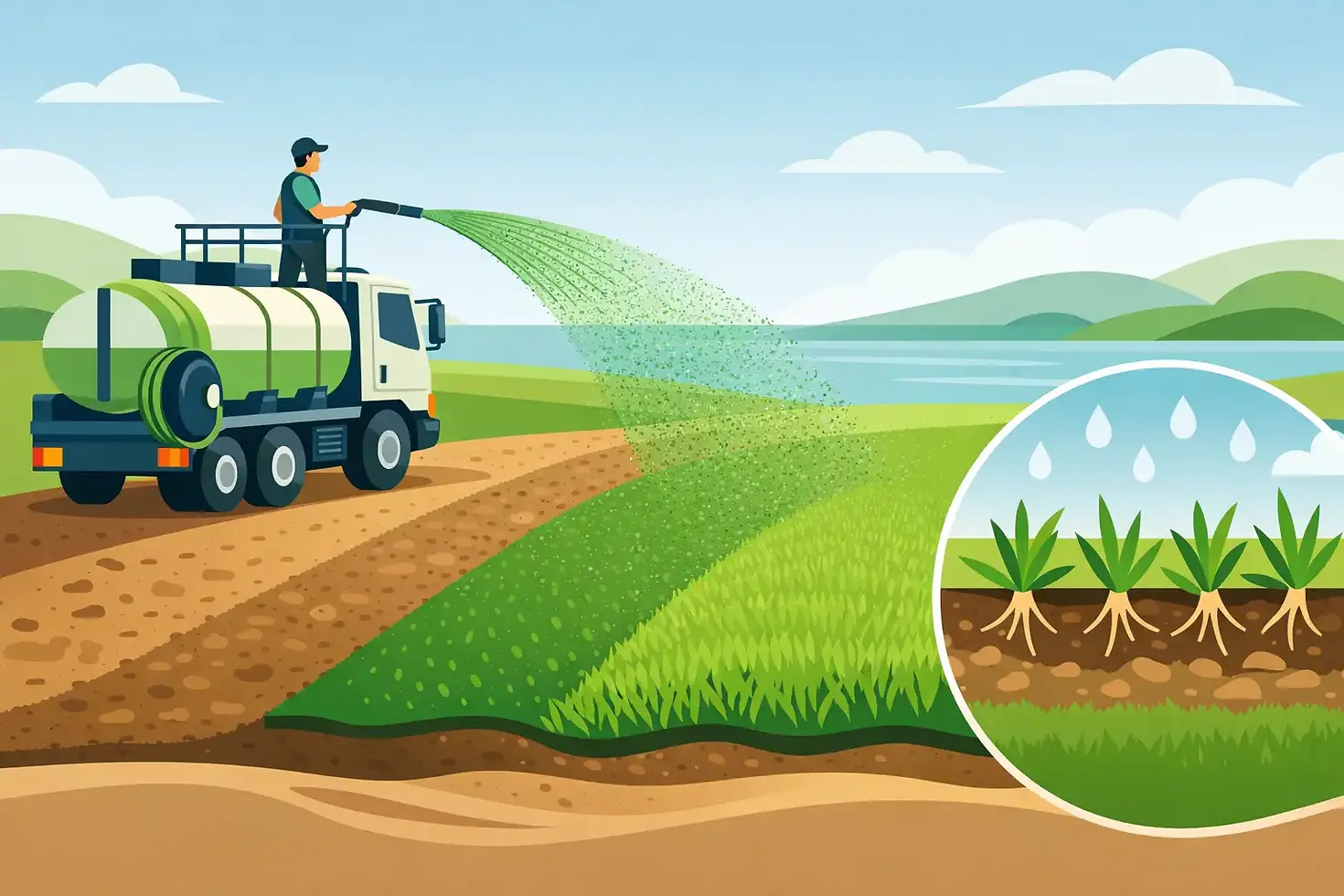
Hydrosprigging is the process of applying sprigs instead of seed through a hydroseeder. Sprigs are pieces of live Bermuda grass plant material - usually stems, stolons, and rhizomes - that can root into the soil and establish a new stand of turf.
Those sprigs are mixed in a tank with water and supporting materials, then sprayed over properly prepared ground. The mulch helps hold moisture. The fertilizer gives the grass a strong start. The bonding agent helps the material stay in place. When conditions are right and the soil has been prepared correctly, the sprigs begin rooting and spreading into a full Bermuda lawn.
This is different from hydroseeding, where the slurry carries seed. It is also different from sod, where mature grass is rolled out in sheets. Hydrosprigging sits in the middle. It gives you a true Bermuda establishment method with better cost efficiency than sod and better varietal options than standard seeding.
Why Bermuda Is Often Sprigged Instead of Seeded
Not all Bermuda grass is the same. Some of the best-performing Bermuda varieties are established from sprigs because they are hybrid types that are not grown from seed in a way that stays true to the parent grass. If you want a premium Bermuda lawn with dense growth, strong wear tolerance, and a cleaner finished look, sprigging is often the route.
That is one of the biggest reasons people look into hydrosprigging. They want more than basic grass cover. They want a lawn or turf area that fills in hard, handles traffic, and holds up through long summers.
For residential properties, that can mean a more uniform lawn around a new home, acreage build, or large yard. For commercial sites, it can mean dependable Bermuda establishment across bigger areas where sod would be expensive and dry seeding would be slower or less predictable.
How the Hydrosprigging Process Works
A good result starts before anything is sprayed. The site needs to be graded correctly, cleared of debris, and prepared so the sprigs have proper soil contact. If the ground is compacted, uneven, or full of washout risks, the grass will struggle no matter what method you use.
Once the site is ready, live Bermuda sprigs are loaded into a hydroseeding tank with water, mulch, fertilizer, and tackifier. The mixture is then sprayed across the target area in an even layer. Because the sprigs are distributed through slurry, coverage is more consistent than traditional broadcast sprigging on many sites.
After application, watering becomes the main factor. The sprigs need steady moisture early on so they can root into the soil. Once establishment begins, Bermuda starts doing what it does best - spreading, thickening, and building a durable turf surface.
The timeline depends on weather, soil temperature, variety, and irrigation. In warm-season conditions, growth can move quickly. In poor conditions or with inconsistent watering, establishment slows down. That is why timing and site prep matter just as much as the application itself.
What Makes Hydrosprigging a Strong Option?
The biggest advantage is that it gives you a premium Bermuda installation method without the full cost of sod. For larger properties especially, that matters. Hydrosprigging can cover a lot of ground efficiently while still using live plant material instead of relying on seed alone.
It also tends to provide more even distribution than older sprigging methods where plant material is spread mechanically and then pressed into the soil. The slurry helps the sprigs stay moist and in contact with the ground, which can improve early establishment when the job is done right.
There is also a practical benefit in rough regional conditions. Oklahoma and Texas properties often deal with high heat, drying winds, sudden rain, and exposed soil. A sprayed slurry with mulch and tackifier can help reduce movement and moisture loss during the vulnerable early stage.
For builders, developers, and property owners working with new construction, hydrosprigging can be a strong fit when they want a true Bermuda lawn but need a smarter price point than full sod installation.
Hydrosprigging vs. Sod vs. Hydroseeding
This is where the right answer depends on the project.
If you need an instant finished look, sod still has the edge. It gives immediate green cover and erosion protection, but it costs more and usually requires a larger upfront investment.
If your main goal is basic grass establishment at the lowest cost, hydroseeding may be the better option, depending on the turf type and site conditions. It works well for many properties, but it is not the same as installing a premium hybrid Bermuda through sprigs.
Hydrosprigging fits the middle ground. It is not instant like sod, and it usually costs more than standard hydroseeding. But it can give you a better Bermuda outcome where performance, durability, and budget all matter.
That trade-off is why it is popular for large lawns, commercial grounds, sports-use turf, ranch properties, and new developments where long-term turf quality matters more than having a finished lawn on day one.
Where Hydrosprigging Bermuda Grass Makes the Most Sense
Hydrosprigging is a strong fit for properties that need durable warm-season turf over a moderate to large area. New construction homes are a common example because the site is already bare and needs full establishment. Large residential lots also make sense, especially when sod would push the budget too far.
On the commercial side, hydrosprigging works well for office developments, multifamily projects, roadside areas, detention zones, and open-use turf where a Bermuda surface needs to fill in and hold up over time. It is also worth considering on land that needs both vegetation establishment and better surface protection during grow-in.
It is less ideal when someone expects overnight results or cannot support the watering schedule needed for establishment. If irrigation is limited or the area must look complete immediately, sod may be the better call.
What to Expect After Application
Hydrosprigging is not a spray-and-forget service. The first few weeks matter. The site needs moisture, monitoring, and enough time for the sprigs to root and spread. During that window, traffic should be limited and mowing should wait until the turf is established enough to handle it.
Bermuda thrives in heat, but early establishment still needs support. If the weather turns extremely dry, if irrigation is inconsistent, or if heavy rain washes across unprotected slopes, the grow-in can be uneven. That does not mean the method failed. It means site conditions still control a big part of the result.
When the prep is right and aftercare is handled properly, Bermuda fills in aggressively. That is the payoff. You are not just covering dirt. You are building a turf surface designed to spread, recover, and last.
Is Hydrosprigging Bermuda Grass Worth It?
For many properties in Oklahoma and Texas, yes. If you want a tougher Bermuda lawn than standard seeding can usually deliver, but you do not want the full cost of sod, hydrosprigging is a practical middle option.
It works especially well when the project calls for real performance - heat tolerance, drought resilience, solid wear recovery, and dependable coverage across a bigger area. It is not the cheapest method and it is not the fastest-looking method. But for the right site, it gives you a strong balance of cost, coverage, and long-term turf quality.
That is why companies like Red Dirt 580 Enterprises use it for customers who need more than a temporary green-up. They need grass that gets established, stays put, and keeps working after the weather gets tough.
If you are weighing lawn options for a new build, a commercial site, or a large piece of bare ground, the best question is not just what is hydrosprigging Bermuda grass. It is whether your property needs a Bermuda solution built for long-term performance instead of short-term appearance.


Comments